
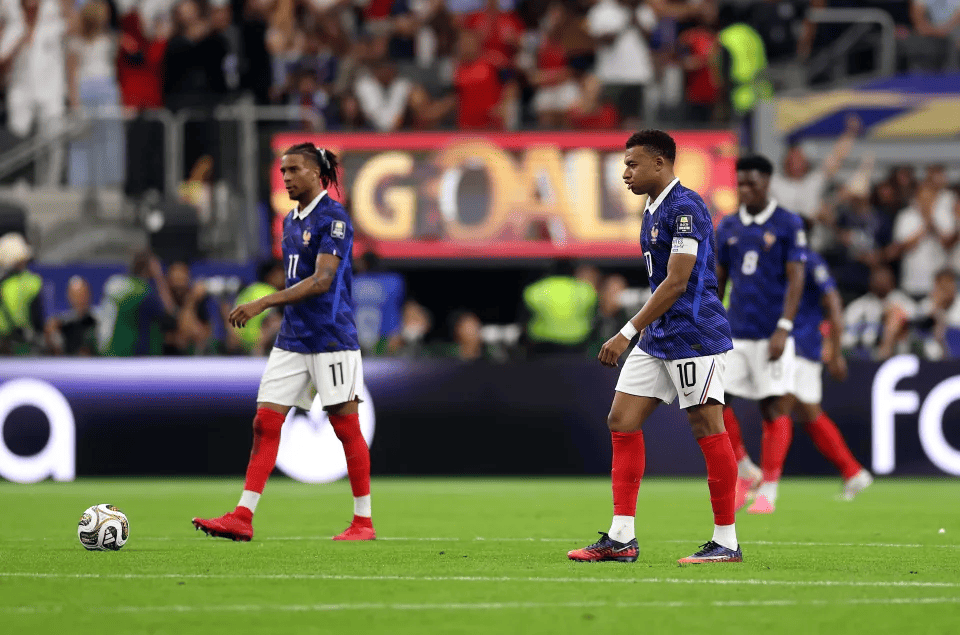
Spain delivered a commanding display of control, discipline and tactical clarity to reach only the second World Cup final in their history, leaving France unable to cope with a team that functioned as one complete unit.
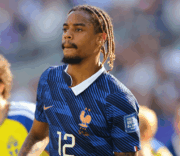
Les Bleus entered Tuesday’s semi-final as strong favourites after moving through the tournament with relative ease. With Kylian Mbappe, Ousmane Dembele and Michael Olise in attack, France appeared to possess enough individual talent to trouble any opponent.
Instead, Spain reminded everyone why they are European champions and why they have now gone 37 matches without defeat. Luis de la Fuente’s side secured a 2-0 victory, matching the longest unbeaten run in international football and producing their most convincing performance of the tournament.
Spain had attracted less attention than several other contenders during the World Cup. They began with a goalless draw against debutants Cape Verde, while Lamine Yamal had managed only one goal before the semi-final.
However, their performances have steadily improved, and their defensive record has become one of the tournament’s defining features. Spain have kept clean sheets in six of their seven matches and will now enter Sunday’s final against either Argentina or England with strong hopes of lifting the trophy.
France must instead prepare for the third-place play-off after being restricted to three efforts on target. Their attacking stars struggled to find space against Spain’s compact midfield and well-organised defensive structure.
Former Premier League champion Chris Sutton described the performance as a complete dismantling of the French side.
“Spain took France apart. They flattened them,” Sutton said on BBC Radio 5 Live. “France have received a lot of praise during this tournament, but Spain were stronger, sharper and better in almost every area.”
Roy Keane offered a similar verdict during ITV’s coverage.
“France did not play like a team,” he said. “They had outstanding individuals, but Spain were the better collective. They were a joy to watch.”
De la Fuente turns doubt into another major final
When Luis de la Fuente became Spain’s senior coach in December 2022, his appointment was met with uncertainty.
Some observers questioned whether a manager best known for his work with Spain’s youth teams had the profile required to lead a nation accustomed to prominent figures such as Vicente del Bosque.
De la Fuente had previously managed Spain at under-19, under-21 and under-23 level. His promotion was viewed by some as a safe internal appointment rather than an ambitious choice.
The 65-year-old has since answered those doubts with results.
Spain won the Nations League in 2023, followed by the European Championship in 2024. De la Fuente has now taken them into a World Cup final, giving the country another opportunity to claim the title it last won in 2010.
Should England defeat Argentina in Atlanta, Sunday’s final would be a repeat of the European Championship final from two years earlier.
De la Fuente’s influence goes beyond tactics. Many members of the current squad worked with him at youth level, creating relationships that have developed over more than a decade.
Mikel Merino won his first international trophy under De la Fuente in 2015. Rodri, now Spain’s captain, and goalkeeper Unai Simon were also part of the team that lifted the European Under-19 Championship that year.
Spanish football expert Guillem Balague believes those shared experiences explain the unity visible in the senior team.
“De la Fuente began this journey ten years ago with players such as Oyarzabal, Dani Olmo, Rodri and Simon,” Balague said. “They won youth tournaments together, built trust and became like a family. The belief that they are stronger together is now part of this team.”
Record-breaking Spain continue their unbeaten run
Spain’s latest victory extended their unbeaten sequence to 37 matches, equalling Italy’s record for the longest run without defeat in international football.
Several Spanish players also hold remarkable records across major tournaments.
Aymeric Laporte has made 22 appearances at World Cups and European Championships without losing. Mikel Oyarzabal has played 20, Fabian Ruiz 16, while Mikel Merino and Lamine Yamal have each reached 14.
Yamal has never lost a senior international match for Spain. The teenager has also started 12 games across World Cups and European Championships and finished on the winning side every time.
No European player with at least that number of starts across the two competitions has maintained a better winning record.
Spain have also become the first team in World Cup history to keep six clean sheets in a single edition of the tournament.
Their control against France was reflected in the expected goals figures. Les Bleus produced only 0.3 xG, the lowest total recorded by a team in a World Cup semi-final since Sweden faced Brazil in 1994.
Those statistics underline how effectively Spain limited a French attack that had previously looked capable of overwhelming opponents.
Spain control every phase of the semi-final
Spain’s World Cup campaign did not begin convincingly.
The opening 0-0 draw against Cape Verde raised questions about their attacking sharpness. They then required a goal in the 91st minute to defeat Portugal in the last 16 and another late winner, this time in the 88th minute, to eliminate Belgium in the quarter-finals.
Against France, they did not need to wait until the closing stages.
Mikel Oyarzabal opened the scoring from the penalty spot before Pedro Porro produced an excellent finish to double the lead inside the first hour.
Those were Spain’s only two shots on target, but their control of possession and territory meant France rarely looked capable of responding.
Former France defender Gael Clichy admitted Spain were deserved winners, even though he did not consider this side the strongest version of the national team.
“This is not the best Spain team we have ever seen,” Clichy told BBC Radio 5 Live. “But the better side won. Spain controlled every stage of the game and executed their plan extremely well.”
Patrick Vieira, who won the World Cup with France in 1998, said Spain dominated in all areas and successfully removed Olise from the contest.
“Collectively, Spain were excellent,” Vieira said on ITV Sport. “They prevented Olise from influencing the match and won the tactical battle.”
Ian Wright described the semi-final as a victory for organisation over individual quality.
“It was structure against individuality,” he said. “What surprised me was how easily Spain imposed themselves.”
Balague went further, calling the performance a model for coaches and young players.
“This was a brilliant team display,” he said. “Spain controlled almost everything, and the way they played should be studied in football academies.”
The spirit of 2010 returns to the Spanish squad
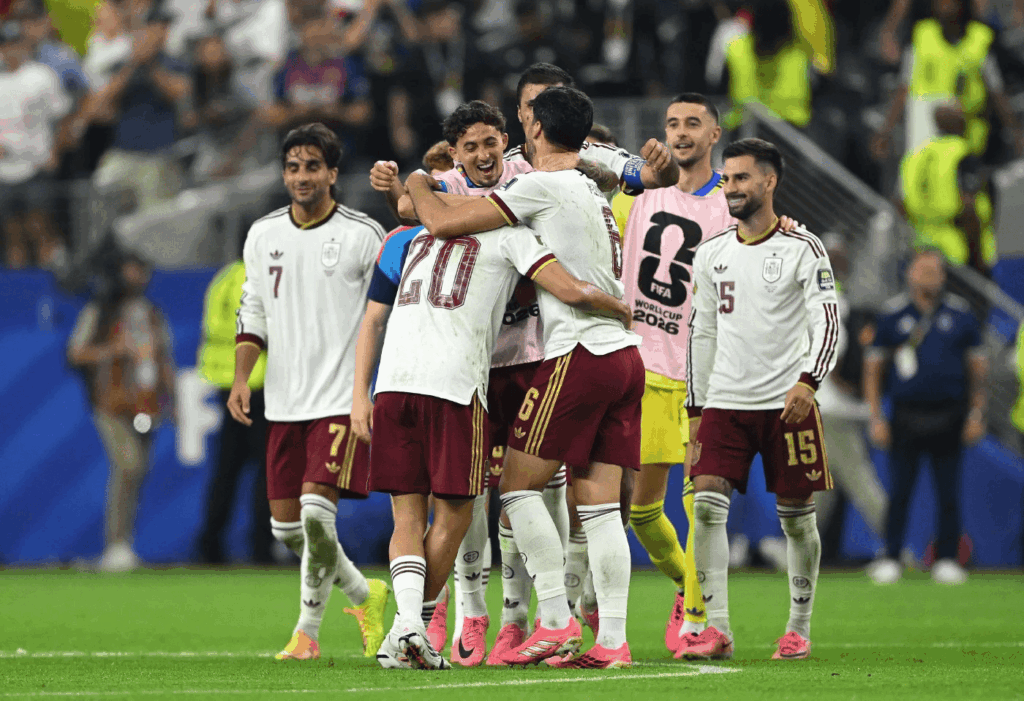
De la Fuente said after the match that Spain had earned their place in the final through effort, talent and sacrifice.
He also suggested the current squad had rediscovered the mentality of the team that won the World Cup in South Africa in 2010.
“We have brought back the spirit of 2010,” De la Fuente said. “The character of this group can be seen in the players who did not feature staying behind to train after the match.”
The coach explained that Spain’s physical preparation had been designed to help the team reach its best level during the closing stages of the tournament.
“This has been a process,” he said. “The plan was always to arrive at this point in the strongest possible condition.”
That planning appears to be working. Spain have looked increasingly composed as the tournament has progressed, combining patient possession with aggressive pressing immediately after losing the ball.
Their ability to control matches without relying on a single player has separated them from teams built more heavily around individual stars.
King Felipe congratulates Spain after final whistle
Celebrations spread across Spain after the victory, with thousands of supporters gathering in streets and public squares.
De la Fuente also revealed that he received a telephone call from King Felipe VI shortly after the final whistle.
The message reflected the national importance of reaching the final and the growing connection between the team and its supporters.
Spain’s progress has been built on familiarity. Many players have known De la Fuente and one another since their youth international careers.
That shared history has created a squad in which substitutes and starters appear equally committed to the same objective.
The unity was visible after the semi-final, as players who had not been involved completed additional training rather than immediately joining the celebrations.
Spain’s midfield exposes France’s lack of structure
Spain’s tactical advantage was most evident in midfield.
France defended with two central midfielders, while Spain used Fabian Ruiz, Rodri and Dani Olmo to create a numerical and technical advantage.
Olmo played as a flexible number 10 and repeatedly moved into deeper areas. His positioning gave Spain a three against two situation in midfield and forced French defenders to make difficult decisions.
When a centre-back followed Olmo, he was capable of receiving under pressure, turning away from challenges and connecting with nearby team-mates.
That movement played a major role in several of Spain’s best attacks.
Olmo also provided the final pass for the second goal, which highlighted another area Spain had targeted throughout the match.
France defended in a passive 4-4-1-1 shape. Their players generally protected zones rather than following Spanish runners.
Spain exploited that approach by pushing their full-backs forward. France’s full-backs were repeatedly left dealing with both a winger and an overlapping defender.
For the second goal, Desire Doue failed to track Porro’s run. The Spanish right-back released the ball, continued forward and received the return pass before finishing past the goalkeeper.
The sequence demonstrated Spain’s superior movement, timing and awareness.
Collective discipline neutralises France’s attacking stars
France’s biggest problem was not a lack of talent but a lack of connection between their most dangerous players.
Mbappe, Dembele and Olise were often isolated. Spain prevented them from receiving the ball in areas where they could accelerate or combine.
Rodri controlled the central spaces, while Ruiz and Olmo helped Spain regain possession quickly whenever France attempted to break forward.
Spain’s counter-pressing also stopped Les Bleus from launching the quick transitions that had caused problems for previous opponents.
France could not build sustained pressure and rarely forced Spain’s defensive line into uncomfortable positions.
The contrast between the two teams was clear.
France depended on moments from individual players. Spain relied on coordinated movement, clear positioning and constant support around the ball.
That collective approach allowed Spain to dominate a match many expected France to control.
De la Fuente has no preferred opponent for the final
Asked whether he would rather face England or Argentina in Sunday’s final, De la Fuente said he had no preference.
He did, however, repeat his admiration for England and confirmed that he had considered them one of the leading contenders before the tournament began.
Balague expects Spain to follow the same tactical approach regardless of the opponent.
“They will want to control possession,” he said. “If they face Argentina, there are defensive weaknesses they can attack, particularly on the counter.”
He also argued that Spain’s flexibility makes them difficult to prepare for.
“They have several ways to hurt teams,” Balague said. “They can control possession, attack quickly and create chances from different areas.”
In his view, Spain’s performance against France may have been worthy of the eventual champions.
“I think the team that will win the World Cup may already have played in this semi-final,” he said.
Balague also compared Spain’s continuity with England’s development since the European Championship.
“Spain have continued with the same identity,” he said. “England have started a new project, and their style is not yet as clear.”
Spain will now have the chance to prove that their system, patience and collective strength are enough to complete the tournament with another major trophy.