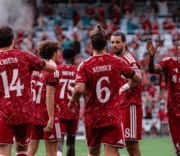

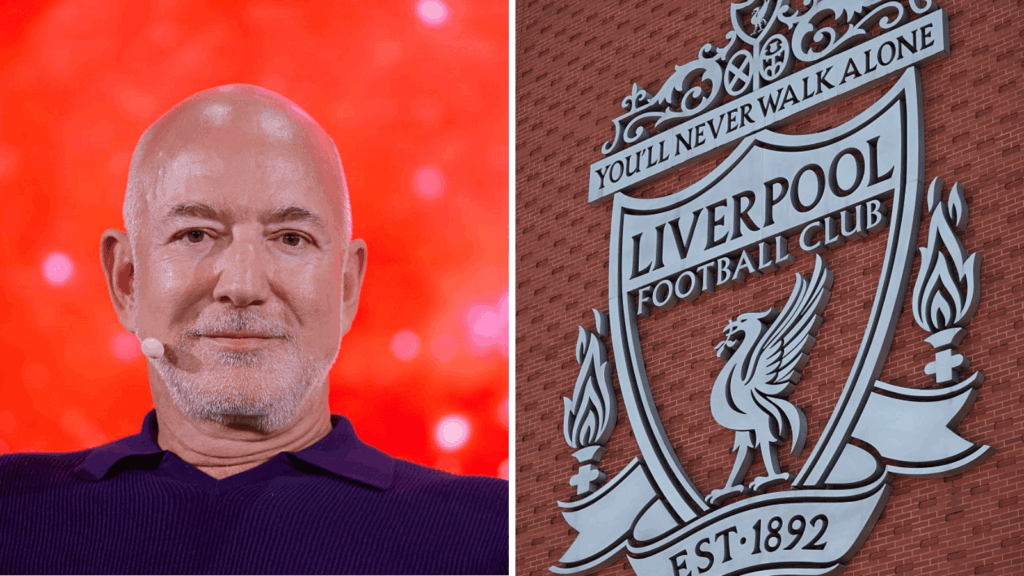
Amazon founder Jeff Bezos has been contacted about joining an investment group that is holding discussions over the purchase of a minority stake in Liverpool.
The consortium is being led by former Queens Park Rangers co-owner Amit Bhatia, who is also the son-in-law of steel billionaire Lakshmi Mittal. Talks remain at an early stage, and there is no guarantee that Bezos will decide to take part in the proposed investment.
Fenway Sports Group, Liverpool’s current owner, has confirmed that a group represented by Bhatia has expressed interest in making a strategic minority investment in the club.
No agreement has been completed, but the possible transaction could value Liverpool at more than $6bn, approximately £4.5bn. Such a valuation would place the deal among the largest investments involving a Premier League club.
Bezos has discussed possible involvement in the consortium
Bezos has held conversations about becoming one of the investors in the syndicate assembled by Bhatia. His participation would add one of the world’s wealthiest businessmen to a group already supported by the Mittal family.
Forbes estimates Bezos’ fortune at almost $257bn, which makes him the fourth richest person in the world. He founded Amazon, owns space company Blue Origin and controls the Washington Post.
The businessman has previously considered investing in major American sports organisations. Reports have linked him with possible bids for NFL teams the Seattle Seahawks and Washington Commanders, although neither proposal resulted in a purchase.
An investment in Liverpool would represent his first major involvement in English football. His participation would attract considerable attention because of his wealth and because American investors already hold a strong position within the Premier League.
Around half of the league’s 20 clubs are controlled mainly by investors based in the United States. Arsenal, recently crowned champions, are among those clubs, while Manchester United remain under the control of the Glazer family alongside INEOS founder Sir Jim Ratcliffe.
Crystal Palace also have substantial American investment, although the club is currently examining a possible sale.
Despite the increasing amount of US capital in English football, Bezos joining the Liverpool consortium would still be viewed as an unexpected development. His previous sporting interest has focused mainly on American franchises rather than European football clubs.
Bhatia group begins talks with Fenway Sports Group
The investment group led by Bhatia has appointed advisers to examine a possible transaction with Fenway Sports Group. The American company, controlled by John Henry, bought Liverpool for £300m in 2010.
FSG also owns Major League Baseball team the Boston Red Sox and has built a portfolio of sporting assets. Under its ownership, Liverpool have increased their commercial value, redeveloped Anfield and won major domestic and European trophies.
A report from the Financial Times suggested that a deal involving Bhatia’s consortium could value the club above $6bn. The final value would depend on the size of the stake, investor rights and the structure of the agreement.
Bhatia stepped down as QPR co-owner on July 21, transferring his shares to Ruben Gnanalingam. That move cleared a potential obstacle before his consortium began more formal discussions concerning Liverpool.
An FSG representative confirmed that Bhatia’s group had made its interest known. The spokesperson described the proposal as a possible strategic minority investment rather than a full takeover of the club.
The exact percentage under discussion has not been officially announced. However, reports have suggested that the consortium could seek a stake of up to 30 per cent.
If that figure proves accurate, the transaction would be considerably larger than the previous minority investment agreed by FSG in 2023.
Previous Dynasty Equity deal provides a possible model
Two years ago, FSG sold a small share in Liverpool to American private equity firm Dynasty Equity. The investment was reported at £164m, while other estimates placed the total commitment at up to $200m, about £149m at the time.
Dynasty Equity became a passive shareholder and did not assume operational control of the club. The money was used to reduce debt and support capital expenditure rather than finance transfers.
Sources familiar with the current talks believe Bhatia’s investment could follow a similar structure. The consortium would acquire a minority position while FSG retained control over major sporting and business decisions.
However, the possible scale of the latest transaction would give the new investors greater influence than Dynasty Equity. A stake approaching 30 per cent could create expectations that the consortium would have a meaningful role in commercial and strategic planning.
That does not mean the investment would immediately increase Liverpool’s transfer budget. Minority investments can strengthen a club’s financial position, reduce debt or fund infrastructure, but they are not automatically directed towards player recruitment.
The precise use of the funds would be determined by the final agreement between FSG and the consortium.
Potential deal raises questions about FSG’s long term plans
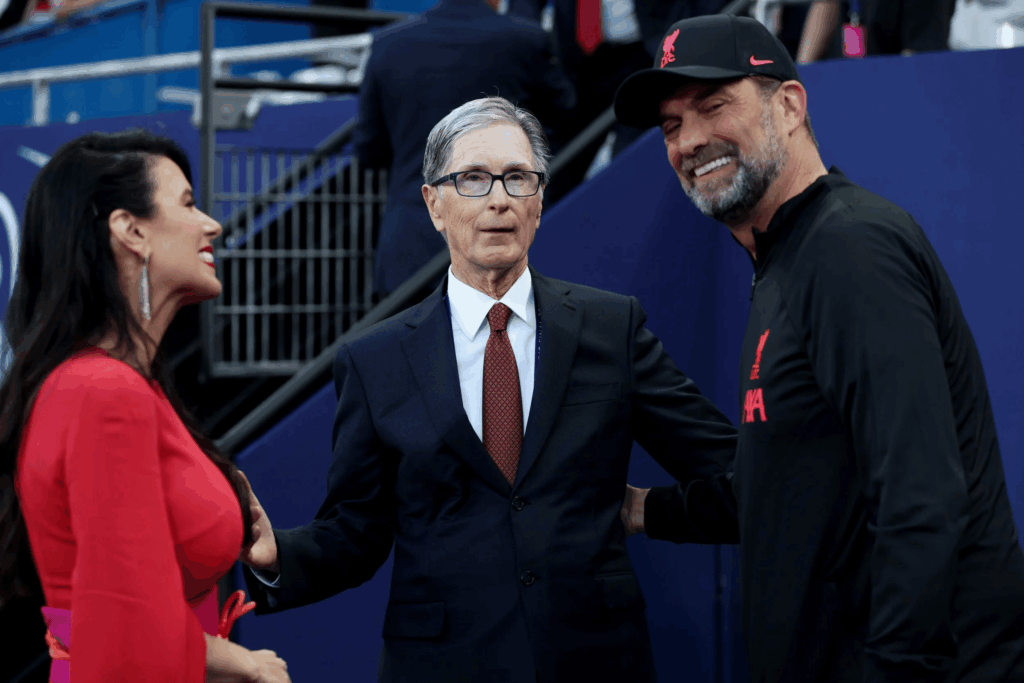
The possibility of a larger minority sale has encouraged discussion about whether FSG could eventually give up control of Liverpool.
Sky News business editor Mark Kleinman described the talks as important for both Liverpool and English football. He noted that a valuation above $6bn would compare with some of the biggest Premier League ownership deals of recent years, including transactions involving Manchester United and Chelsea.
Kleinman also stressed that the discussions remain at an early stage. The consortium includes several investors, and its final composition has not yet been settled.
He believes Bezos is likely to participate if the deal progresses, although no formal commitment has been announced.
A sale of up to 30 per cent would inevitably lead to speculation about a future change of ownership. FSG has stated that it does not intend to surrender control and views the proposal as a minority transaction.
Even so, a major outside investor could be positioned to acquire a larger share later. Some observers believe the new arrangement could create a route for FSG to sell its controlling interest within the next few years.
There is currently no evidence that such a sale is close. The club’s owners still see opportunities to increase Liverpool’s revenue and valuation through commercial agreements, stadium income and international growth.
Investment may not lead to immediate spending on players
Financial expert Amber Pinto said Liverpool remain one of the strongest sporting assets available to investors. The club’s global support, commercial income and sporting history make a minority stake attractive even without control of day to day operations.
A strategic minority investor usually contributes more than capital. Such a shareholder may provide commercial contacts, operational knowledge and access to new markets while leaving final authority with the majority owner.
For Bhatia and the other investors, the deal would provide access to the management of one of the world’s leading sports organisations. It could also create further business opportunities outside football.
The effect on Liverpool’s transfer activity would probably be limited in the early stages. A transaction of this scale would require lengthy legal, financial and regulatory work before completion.
Even after an agreement, the money could be allocated towards debt reduction, infrastructure or wider commercial expansion. Additional transfer spending would depend on the club’s revenue, profitability rules and the priorities established by FSG.
Longer term growth could still improve the football budget. If the investment helps Liverpool increase income, the club may have more room to spend under financial regulations.
Finance experts expect FSG to retain control for now
Football finance specialist Kieran Maguire believes FSG will approach any offer with a strict financial assessment.
He argued that the group’s decisions are driven by business value rather than emotional attachment. FSG is likely to consider any proposal that improves its financial position, but it may still believe Liverpool can become more valuable.
That expectation of further growth is one reason the owners may prefer to sell a minority stake instead of the whole club.
Maguire said the possibility of a future majority sale cannot be dismissed. Every investment has a price, and FSG would probably examine an exceptional offer.
However, he does not expect the company to give up control in the near future unless a buyer presents a figure well above Liverpool’s current valuation.
Some Premier League owners have suggested that leading clubs could eventually be worth £10bn. If FSG shares that view, retaining control while bringing in minority capital may be considered the most profitable option.
Who is Amit Bhatia?
Bhatia worked as an investment banker at Morgan Stanley before moving into business. His investment interests include construction, property and private equity.
He later became a director and co-owner of Queens Park Rangers. During his period at the club, QPR won promotion from the Championship to the Premier League in the 2010/11 season.
The team spent the next four campaigns moving between the top division and the Championship before suffering relegation in 2014/15. Their best finish since then was ninth place in the Championship during the 2020/21 campaign.
A stand at Loftus Road now carries Bhatia’s name, reflecting his long association with the London club.
The 46 year old married Vanisha Mittal Bhatia in 2004. She is the daughter of Lakshmi Mittal, whose fortune is estimated at more than £22bn.
The Mittal family’s financial support gives the consortium substantial resources even without Bezos. His involvement would strengthen the group further and make the proposal one of the most closely watched ownership developments in European football.
For now, discussions continue without a completed agreement. FSG remains in control of Liverpool, while Bhatia’s group evaluates the structure and value of a possible minority investment.