
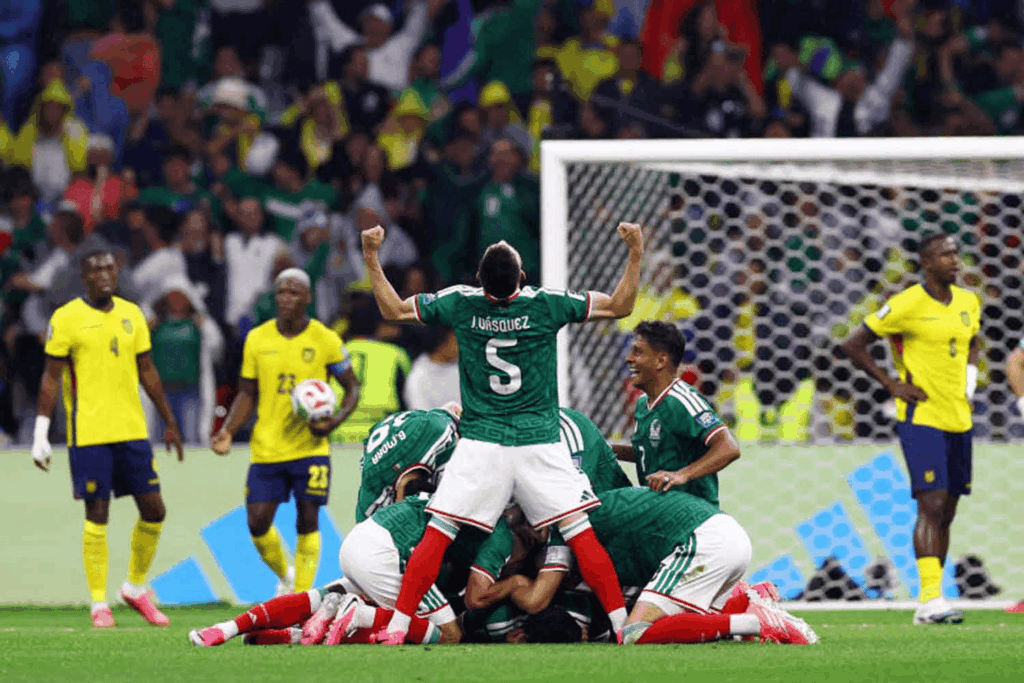
Mexico brushed aside a weather delay, handled the pressure of a restless home crowd and beat Ecuador 2-0 to claim their first World Cup knockout victory since 1986.
For a country that has carried that date like a weight for four decades, this was more than a place in the next round. It was a release. The co hosts played with speed, confidence and a sense of occasion, turning a tense night in Mexico City into one of the loudest celebrations of the tournament.
The win sends Mexico back to the Estadio Azteca for a last 16 match on July 5, where they will face either England or DR Congo. England meet DR Congo in Atlanta on Tuesday, with the winner earning the right to step into one of the most intense atmospheres in world football.
The build up had already been noisy before the storm arrived. Ecuador complained to FIFA after videos appeared online showing Mexico fans holding an improvised fan gathering outside the Ecuador team hotel the night before the match. Then thunder and lightning took over, forcing kick off to be delayed by an hour.
Once play finally began, Mexico wasted no time. Julian Quinones broke forward from his own half, chased down a long pass and produced a brilliant finish into the top corner. Raul Jimenez then doubled the lead in the 31st minute, beating Hernan Galindez with a fierce strike that left Ecuador with a mountain to climb.
Before those goals, 17 year old Gilberto Mora had almost opened the scoring with a curling effort. By starting the match at 17 years and 259 days, he became the youngest player to start a World Cup knockout game since Pele, who was 17 years and 239 days old in 1958.
Ecuador never really looked capable of turning the match around. Mexico controlled the key moments and secured only the second knockout win in their World Cup history. The night ended badly for Ecuador, with Arsenal defender Piero Hincapie sent off after covering his mouth during a confrontation, an offence under rules introduced for this tournament.
Mexico’s ambition no longer sounds unrealistic
Before the match, opinion in Mexico was split over how far this team could really go. Some players had spoken with real confidence in public. Midfielder Obed Vargas even said Mexico should be thinking about reaching the final.
That level of belief was not shared everywhere. In the local press, some voices warned against overrating the squad. Record editor Rene Tovar wrote on social media that people were trying to inflate an average product and that Mexico needed to keep its feet on the ground.
After this performance, that caution feels harder to maintain.
This was the night Mexico lifted itself. The goals were spectacular, but the wider performance was just as important. Javier Aguirre’s team did not simply ride the energy of the crowd. They played with control, aggression and a clear structure.
Goalkeeper Raul Rangel was excellent when called upon. Johan Vasquez and Cesar Montes were strong and reliable at centre back. Quinones gave Ecuador constant problems with his direct running, while Roberto Alvarado offered a different type of threat from the opposite side.
Jimenez worked relentlessly through the middle and capped his performance with a fine goal. Erik Lira, returning to the side and arguably one of Mexico’s most important players, took charge of the midfield battle.
Mexico are not flawless. Outside Quinones, there is not overwhelming pace across the team. Compared with some of the strongest squads left in the competition, they do not have the same long list of global superstars.
That may actually suit them. This is a team built around effort, connection and shared responsibility. Aguirre has created a close dressing room, and the Azteca crowd gives the side another layer of belief. Whoever comes next, England or DR Congo, will need a serious performance to stop the co hosts in Mexico City.
Mexico’s run matters far beyond one result
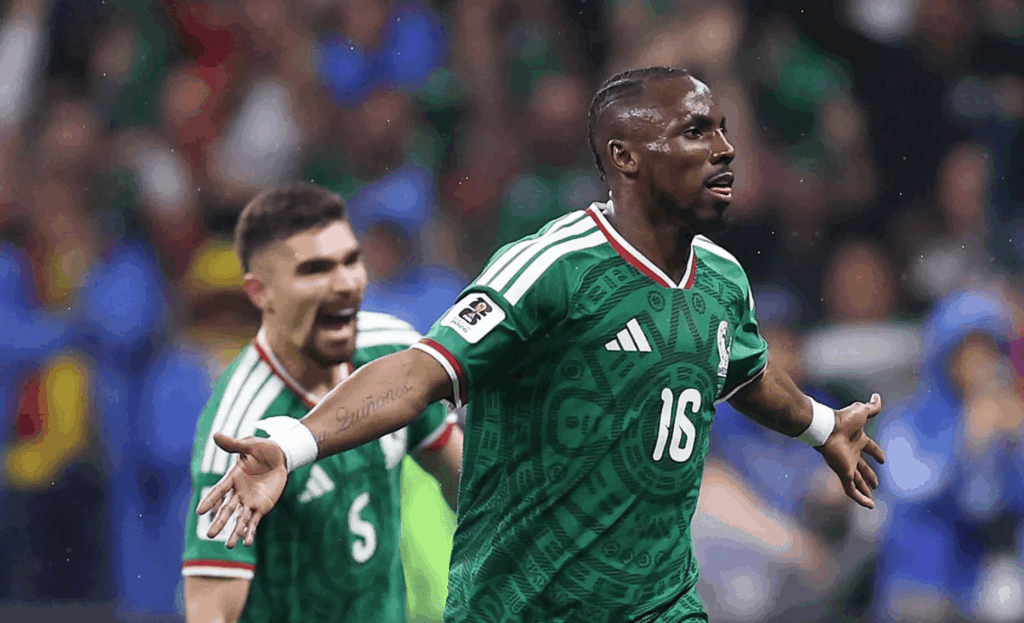
Mexico did not want to become the first co host eliminated from this World Cup. Against Ecuador, El Tri played with an intensity that swallowed the opponent from the opening minutes and gave supporters a reason to dream bigger.
The historical weight of the result is obvious. Mexico had not won a World Cup knockout match since 1986, the last time the country hosted the tournament. Now, with home support in Mexico City and Guadalajara already playing a major role, the team has a chance to build something that could define this generation.
Canada have already reached the last 16. The United States hope to do the same against Bosnia and Herzegovina. But Mexico remaining in the tournament carries a special force.
Across North American football, Mexico’s support base is unlike anything else. El Tri regularly fill NFL stadiums for friendlies in the United States. In cup matches against the U.S., Mexican fans often make neutral venues feel like home.
There are nearly 40 million people of Mexican heritage living in the United States. For many of them, the national team is a direct emotional link to home. That is why Mexico’s progress does not only matter inside the country’s borders. It changes the mood of the whole tournament.
Tuesday’s win over Ecuador was Mexico’s first major test of this World Cup. They passed it with authority. Now the question is no longer whether they can survive the knockout stage. It is how far the Azteca factor, Aguirre’s structure and this group’s belief can carry them.
Mora makes history and shows no fear
Gilberto Mora now shares a rare piece of World Cup history with Pele.
In 1958, Pele was a 17 year old teenager leading Brazil towards the first of three World Cup titles in his international career. Mora is not close to that kind of legacy yet, and nobody should place that burden on him. Still, starting a World Cup knockout match at 17 is a remarkable achievement.
Against Ecuador, Mora looked calm from the first whistle. The occasion did not seem to weigh on him. The sold out stadium, the pressure, the stakes and the noise all passed around him while he played as if this level already belonged to him.
He was sharp on the ball, chose his passes quickly and looked comfortable in tight spaces. At times, he played one touch football with the timing of a veteran. He also carried the ball at opponents and showed no hesitation when Ecuador tried to close him down.
Mora left the match in the 59th minute, but by then he had already shown enough to explain why Mexican fans are so attached to him. He has become one of the faces of this team, not just because of his age, but because of the maturity of his football.
Aguirre clearly trusts him. Supporters already adore him. Mora is not a legend yet, and it would be unfair to talk as though he is. But at this World Cup, he has become one of Mexico’s most watchable players.
Hincapie repeats a costly mistake
Ecuador’s night ended with frustration, and Piero Hincapie’s red card added one final blow.
Earlier in the tournament, Paraguay’s Miguel Almiron was sent off in a moment that initially confused many viewers. Only after replays and explanations did it become clear that he had been punished for covering his mouth during a confrontation with an opponent.
That rule is part of this World Cup. Covering the mouth in that type of exchange can now lead to a red card.
Hincapie fell into the same trap against Mexico. The Arsenal defender appeared to say something to Santi Gimenez while covering his mouth. After the referee reviewed the incident on video, he showed the red card.
It was a strange and needless end to Ecuador’s tournament. By that point, Mexico had already taken control of the match, but the dismissal summed up Ecuador’s frustration. They had complained before kick off, struggled during the game and finished with a player sent off for an offence that teams should already understand.
Quinones turns tension into celebration
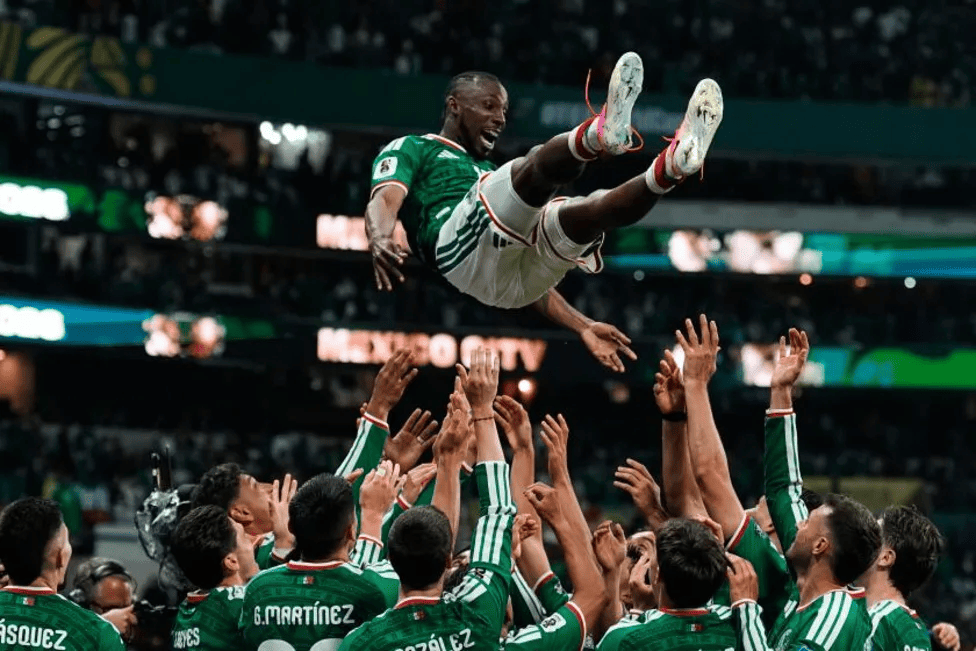
Mexico had played some attractive football in the group stage, but questions remained. The level of opposition had made it hard to judge them properly.
South Africa were poor in the opening match. South Korea never found a real rhythm in the second. The Czech Republic then faded badly. Ecuador represented the co hosts’ first true test of the tournament.
Mexico answered it almost immediately.
They started with pace and purpose, stretching an Ecuador defence that had looked strong earlier in the competition. The opening goal captured everything good about their approach.
Mexico moved the ball patiently at the back, drawing Ecuador forward. Johan Vasquez found Jesus Gallardo, who moved it down the line to Quinones. His pass to Luis Romo looked slightly short, but Romo stayed composed and found Alvarado. The winger then clipped a beautifully weighted ball over the defence.
Quinones still had plenty to do. He ran onto the pass, cut inside and hammered his shot into the top corner of Galindez’s goal.
The reaction was wild. Beer came down from the stands and the Azteca erupted. What could have become a nervous evening changed in an instant. Mexico had found the goal, found the mood and found the belief.
From there, Ecuador looked shaken. Mexico did not need to chase the game anymore. They could play with confidence, feed off the stadium and force Ecuador to take risks.
Jimenez gives Mexico the finish it needed
Raul Jimenez nearly scored before Quinones opened the scoring. His diving header flashed wide of the Ecuador goal, and for a moment, the crowd held its breath.
The Azteca was already in full voice because of Mexico’s aggressive start. Had Jimenez scored then, the stadium may have exploded even earlier. Instead, the miss created a short wave of anxiety. Some Mexican fans stood with their hands on their heads, aware of how quickly a missed chance can shape a knockout match.
That feeling did not last long.
Quinones soon put Mexico ahead with a brilliant finish. Then, 11 minutes later, he helped create the goal that truly gave Mexico control.
He slipped a fine ball into Jimenez just outside the Ecuador penalty area. The striker took one touch towards goal and struck powerfully into the top corner. Galindez had little chance.
Ecuador looked deflated. Mexico looked certain. For Jimenez, the goal was another chapter in a World Cup run that has turned him into one of the emotional leaders of the side.
He is the heart of this squad in many ways. His work rate, presence and finishing have given Mexico a reliable focal point. Against Ecuador, he did not just score. He made the result feel inevitable.
Weather delay adds another strange note
The match at the Estadio Azteca was delayed by one hour after severe weather hit Mexico City shortly before the scheduled start.
Tournament rules require play to be delayed when extreme weather creates safety concerns. The electrical activity around the stadium before the planned 7pm local kick off was enough for officials to stop the normal match routine.
Both teams were unable to warm up as planned, and FIFA soon confirmed the delay along with the amended start time. It was not the first time weather had affected this World Cup.
France’s group stage win over Iraq had previously been paused for more than two hours because of thunderstorms in Philadelphia. Heat has also been an issue, with FIFA introducing in match hydration breaks before the tournament because many games are being played in high temperatures.
When FIFA announced the delay at the Azteca, it stated that the cooling breaks would not take place as a result.
But during the match, the referee stopped play around the 23rd minute. The players walked to their sidelines as they would during a regular hydration break. The Mexican crowd briefly jeered, then filled the pause by singing “Mexico lindo”.
Later, the line on FIFA’s website saying that no hydration breaks would take place during the match had been removed from the statement.
It was another odd detail on a night already full of tension, noise, history and emotion. For Mexico, though, none of it mattered in the end. The storm passed, Ecuador faded and El Tri finally ended a 40 year wait for a World Cup knockout victory.