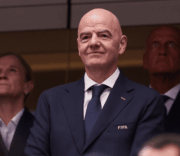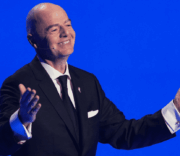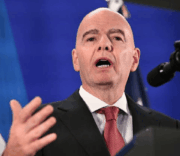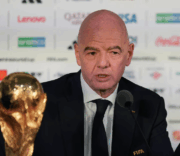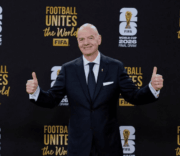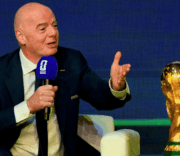

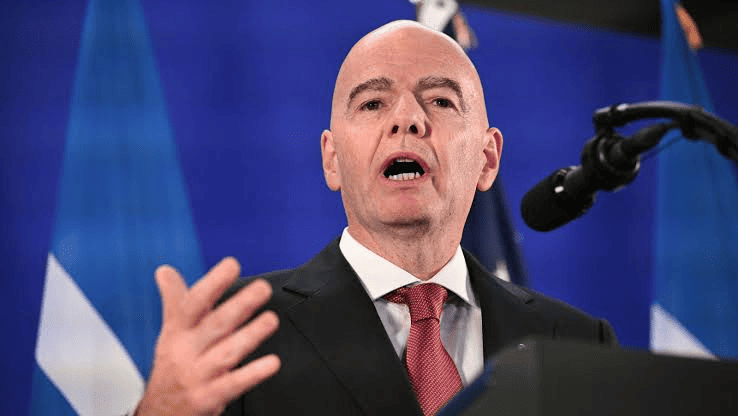
The Football Association is preparing to formally withdraw its support for Gianni Infantino’s attempt to secure another term as FIFA president, increasing the pressure on the organisation’s embattled leader.
The FA is expected to send a letter to FIFA confirming that it no longer endorses Infantino for a fourth term. England had previously backed his candidacy, but its position has changed following growing criticism of his leadership and recent decisions.
The move follows a similar announcement from the Football Association of Wales, which confirmed that it had also withdrawn its support. Finland became the first European federation to reverse its endorsement last week.
Several other national associations are now expected to take the same step as part of a wider effort to challenge Infantino’s position and potentially force him to leave office.
European federations prepare coordinated action
UEFA member associations have reportedly been discussing a collective withdrawal of the letters they previously sent in support of Infantino.
Before the latest controversy, 50 of UEFA’s 55 national federations had backed his re-election. That support began to weaken after details emerged about a privately supported plan connected to the sale of a stake in the World Cup.
The proposal, known as the FIFA Forward Enterprise scheme, caused serious concern among European football officials. Critics questioned its governance structure, decision making process and potential impact on the future control of FIFA competitions.
The English FA had previously maintained its support for Infantino despite raising concerns about his administration. However, it repeatedly opposed the FIFA Forward Enterprise project in both public statements and private discussions with FIFA representatives.
On Saturday, the FA demanded a full and comprehensive examination of FIFA’s leadership and governance. Its decision to withdraw support represents a further escalation of its response.
England may keep its letter private
Although the FA is taking a firm position, it is not expected to publish the withdrawal letter immediately.
There is a belief among some European officials that the campaign against Infantino must gain support outside UEFA before it can become truly effective. Opposition from European federations is expected to grow quickly, but votes from other confederations could ultimately decide his future.
The reaction of members from the Asian Football Confederation and Concacaf is likely to be particularly important. Opinion about Infantino’s leadership has been less united in those regions, meaning their response could determine whether the campaign to remove him gathers enough international support.
Infantino is currently expected to lead an extraordinary FIFA congress in November. That meeting is due to confirm the United Kingdom as host of the 2035 Women’s World Cup, provided he remains in office.
Wales says Infantino has lost its confidence
The Football Association of Wales announced on Monday that it had officially withdrawn its endorsement of Infantino for the presidential term covering 2027 to 2031.
In its statement, the Welsh governing body pointed to failures in governance, leadership, communication, values, stakeholder relations and decision making.
The FAW said those concerns had caused Infantino to lose its confidence and argued that FIFA’s leadership had failed to place the interests of football above other considerations.
According to the Welsh association, such a failure could not be accepted from the person responsible for overseeing the global game.
The decision places Wales among the first federations to take formal action and adds further weight to the European campaign.
Welsh officials played a central role in the opposition
Representatives of Welsh football have been closely involved in efforts to challenge Infantino and stop the FIFA Forward Enterprise proposal.
Laura McAllister, a UEFA vice-president and former Wales international, raised the possibility of a Europe-wide boycott of FIFA competitions during a meeting of member associations last Thursday.
She argued that UEFA federations should consider refusing to participate in FIFA tournaments unless Infantino abandoned the scheme.
The discussion resulted in a collective position that left the proposal with little chance of proceeding. The growing resistance also encouraged more federations to reconsider their support for the FIFA president.
With England and Wales now joining Finland in withdrawing their endorsements, pressure is continuing to build. The next stage will depend on how many European associations follow and whether the opposition can attract significant backing from other continents.