
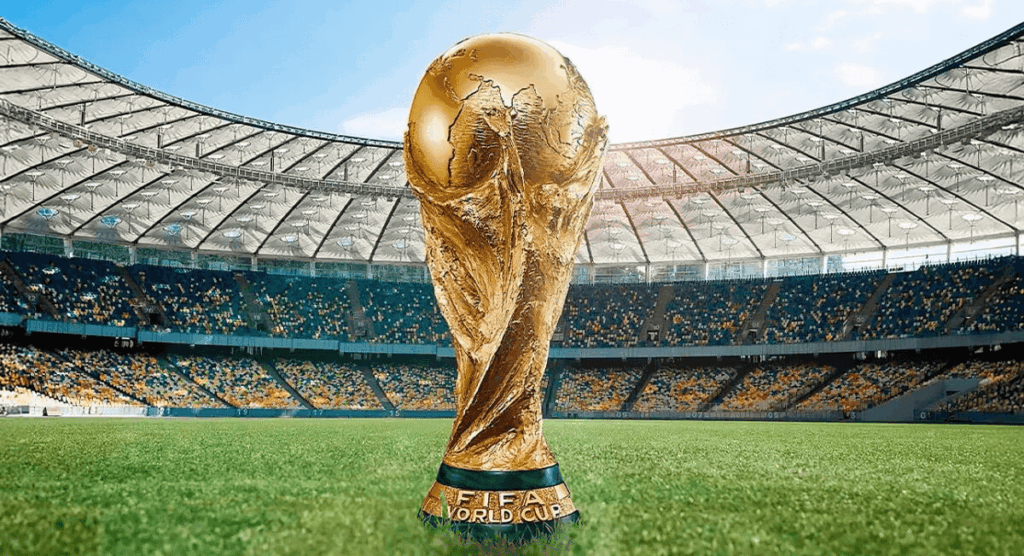
The 2030 FIFA World Cup will take place across six countries and three continents, using a special structure created to celebrate 100 years since the first edition of the competition.
The opening centenary fixtures are expected to be played in Uruguay, Argentina and Paraguay. Once those matches have been completed, the tournament will continue mainly in Spain, Portugal and Morocco.
This arrangement will make the 2030 competition the first men’s World Cup to be staged in six different countries and across South America, Europe and Africa.
When will the 2030 FIFA World Cup take place?
The next men’s FIFA World Cup after the 2026 tournament will be held in 2030.
Under FIFA’s proposed calendar, the three centenary matches in South America are scheduled for June 8 and 9. Uruguay, Argentina and Paraguay are each expected to host one game during this opening phase.
The main opening ceremonies and the first matches in Morocco, Portugal and Spain are then planned for June 13 and 14.
The final is expected to take place on July 21. FIFA has not yet published or approved the complete match calendar, so some dates and details could still be adjusted.
Which countries will host the competition?
Spain, Portugal and Morocco will stage most of the matches during the 2030 World Cup. These three countries will serve as the tournament’s principal hosts, including the majority of the group stage, knockout fixtures and the closing stages.
Uruguay, Argentina and Paraguay will each host one opening round game as part of the centenary celebrations.
Uruguay was chosen because it organised the first FIFA World Cup in 1930 and became the inaugural champion. Its centenary fixture will recognise the country’s central role in the creation of the tournament.
Argentina will also receive a match because it finished as runner up at the 1930 World Cup, losing the final to Uruguay in Montevideo.
Paraguay’s involvement recognises its status as the home of CONMEBOL. The South American governing body was the only continental football confederation already in existence when the first World Cup was held.
After these three games, the competition will move to Spain, Portugal and Morocco for the remaining fixtures.
Which national teams have already qualified?
Six countries have already secured automatic places at the 2030 World Cup because of their hosting responsibilities.
Spain, Portugal and Morocco have qualified as the three main organisers. Uruguay, Argentina and Paraguay have also received automatic entry after being selected to stage the centenary matches.
Under the current 48 team format, another 42 places will be available. Those positions will be decided through the qualifying competitions organised by FIFA’s continental confederations.
The qualification process will take place during the years leading up to the tournament, with teams competing through their respective regional systems.
How will the opening schedule work?
The unusual geographical structure will require additional travel and preparation time for the teams involved in the South American matches.
Uruguay, Argentina and Paraguay, along with their first opponents, are expected to receive longer recovery periods before playing their next group fixtures. This is intended to account for the journey from South America to Europe or Africa.
The centenary matches are currently planned for June 8 and 9. The primary opening events in Morocco, Portugal and Spain are expected to follow on June 13 and 14.
The other teams drawn into the groups containing Uruguay, Argentina and Paraguay would begin their campaigns on June 15 and 16.
The second group matches involving those teams are scheduled for June 21 and 22, giving the participants enough time to travel, rest and prepare.
FIFA has yet to confirm the full order of matches, stadium assignments and kickoff times.
Could the World Cup grow to 64 teams?
The 2030 World Cup is currently expected to include 48 national teams. This is the same format introduced for the 2026 tournament in the United States, Canada and Mexico.
There has, however, been discussion about a possible increase to 64 teams.
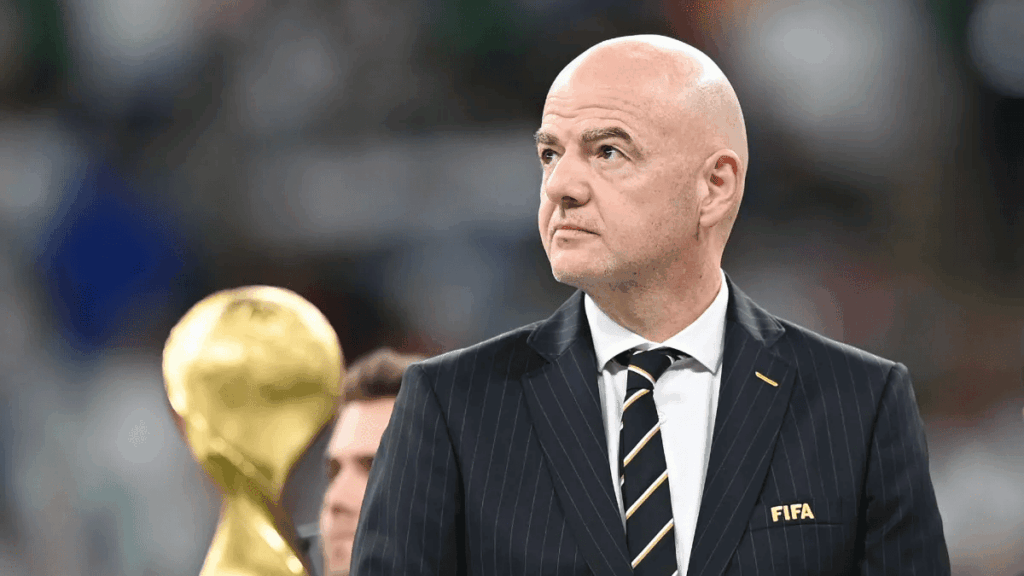
FIFA President Gianni Infantino has said that the organisation will review and discuss a proposal to expand the competition. He described the 48 team system as highly successful because it allowed more countries to appear at football’s biggest international event.
Infantino also pointed to the performances of smaller football nations during the 2026 World Cup. In his view, wider participation gives more national teams access to elite competition and supports the growth of football in different regions.
A 64 team competition would require major changes to the schedule, qualification system and number of matches. No final decision has been announced, and the official plan for 2030 remains a tournament featuring 48 teams.
How did the FIFA World Cup begin?
The idea of creating a separate world championship developed after the success of the men’s football competitions at the 1924 and 1928 Olympic Games.
Uruguay won both tournaments. At the 1924 Olympics in Paris, the South American side defeated Switzerland 3-0 in the final before a crowd of almost 50,000 spectators.
Four years later, Uruguay retained the Olympic title by beating Argentina 2-1. The popularity of these tournaments helped convince FIFA that an independent international competition for national teams could attract global interest.
Football at the Olympic Games was controlled by the International Olympic Committee, so FIFA decided to establish its own championship.
In May 1928, the organisation approved plans for the first World Cup and later selected Uruguay as the host.
The country had won the previous two Olympic football titles and was preparing to celebrate 100 years of independence in 1930. These factors made Uruguay a suitable choice for the inaugural tournament.
The first FIFA World Cup was held in July 1930 and featured 13 national teams. Several European squads travelled to South America by ship because commercial air travel was not widely available.
Uruguay reached the final against Argentina at the Estadio Centenario in Montevideo. The hosts won 4-2 and became the first men’s world champions.
The tournament has grown considerably since that first edition. It expanded from 13 teams in 1930 to 32 teams in 1998, before increasing again to 48 participants in 2026.
The 2030 edition will commemorate a century since the original competition while introducing a hosting model spread across six nations.
Which country will host the 2034 World Cup?
The men’s World Cup following the 2030 tournament will take place in 2034, with Saudi Arabia serving as the host nation.
FIFA confirmed Saudi Arabia’s selection in December 2024 after it became the only country to submit a bid for the competition.
Unlike the 2030 edition, which will involve six countries and three continents, the 2034 World Cup will be organised by a single nation.
FIFA has not yet announced the official tournament dates, detailed calendar or complete list of stadiums for the 2034 competition.