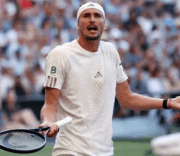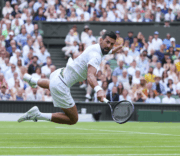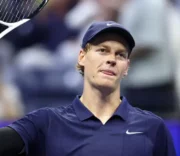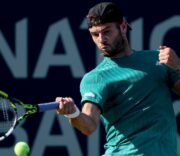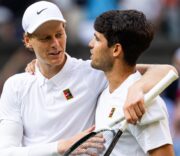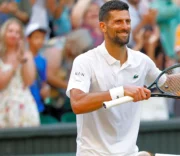

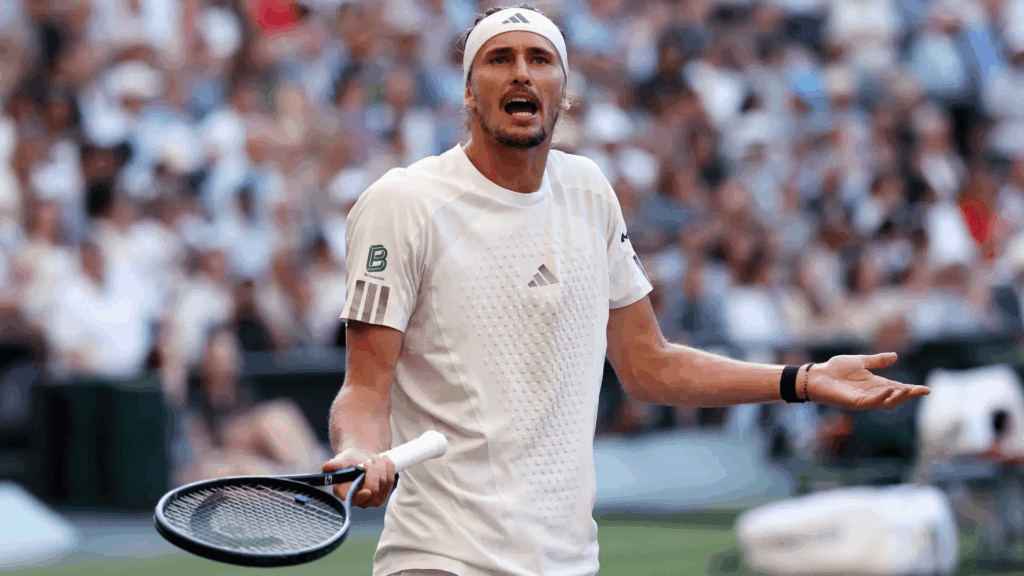
Alexander Zverev found one genuine opportunity against Jannik Sinner, but it lasted only a few seconds. The German briefly looked capable of changing the direction of the match before the world No 1 closed the door and took complete command.
The first break point on Sinner’s serve did not arrive until shortly before 7pm, after 162 minutes of tennis. The players were level at one set each and almost nothing separated them. In a contest that had offered very few chances, this felt like a decisive moment. Sinner missed his first serve, leaving Zverev with a rare look at a second delivery.
The serve was more cautious than usual and Zverev produced a strong return. A short baseline exchange followed, with both players searching for an opening. Then Sinner suddenly raised the level. He drove an immaculate backhand on to the sideline before following it with a perfectly weighted drop shot. Zverev rushed forward, slipped and ended up on the court clutching his knee.
Looking back, that rally was the German’s best opportunity. The opening appeared and vanished almost immediately.
Sinner turns Zverev’s hope into frustration
That sequence captured the difficulty of facing Sinner at his best. The Italian has a habit of allowing an opponent to believe that progress is possible before taking control with two or three shots of exceptional quality.
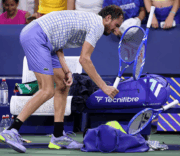
Zverev had worked for nearly three hours to create that break point. Sinner erased it without panic and soon began to apply pressure of his own. Not long afterwards, Zverev lost his serve for the first time in the match and threw his racket in frustration.
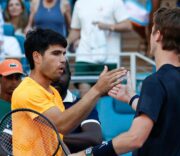
By 7.07pm, Sinner led by two sets to one. At 7.56pm, the players were shaking hands while spectators raised their phones to record the champion’s celebration.
Zverev may have produced his strongest performance of the tournament. His serve remained a major weapon, his groundstrokes were solid and he competed with far more belief than in several previous meetings with Sinner. Still, his reward was little more than the sense that he had nearly created a real contest.
That is the danger of entering what could be called the Sinner Zone. An opponent can serve well, defend bravely and remain close on the scoreboard, yet still feel that the result is moving in only one direction.
The conditions offer no rescue for Sinner’s rivals
Since Sinner’s collapse in Paris, much of the discussion around him has focused on his difficulties in heat and humidity. Those conditions appear capable of reducing his energy and affecting his concentration.
The fact that weather is considered one of the best ways to trouble him says plenty about the challenge facing the rest of the men’s tour. Around 200 players are trying to remove him from the top of the rankings, but one of their strongest sources of hope may be a difficult forecast.
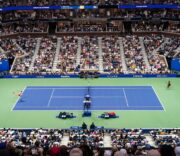
At Wimbledon, even the weather worked in Sinner’s favour. A surprisingly strong breeze crossed Centre Court as the tournament moved towards its conclusion. The shadows lengthened, the temperature dropped and the chances of a dramatic physical decline became smaller.
For two sets, the match followed a strict pattern. Both men dominated behind serve and gave away almost nothing. The contest had an orderly, controlled rhythm before becoming slightly less predictable later on.
The central theme was always the serve. Sinner and Zverev possess two of the most dangerous deliveries in the game, and this final became a contest between two players capable of ending points before a rally had properly begun.
At that level, the difference was always likely to come from a tiny number of mistakes. One missed first serve, one weak second ball or one poorly chosen shot could decide an entire set.
Zverev’s serve keeps him within reach
The numbers explain how difficult Zverev made Sinner’s task. Across 21 service games and two tie breaks, the German hit 60 serves that were not returned.
That works out at almost three free points per game. Sinner is widely regarded as one of the finest returners in men’s tennis, but he was effectively beginning many games with a large disadvantage before he had even put the ball back into play.
Zverev used that weapon to take the opening set in a tie break. His winning backhand in the breaker was only his second from that side during the match, but it was enough to give him the lead and briefly suggest that an upset might be possible.
The second seed arrived in the final with unusual confidence. His French Open victory appeared to have given him a harder competitive edge and greater belief in the biggest matches.
His Wimbledon history had previously offered little encouragement. Before this season, he had not defeated a top 10 opponent on grass for 10 years. He had never advanced beyond the fourth round at the All England Club. He had also failed to beat Sinner in nine previous attempts.
As Zverev walked towards his chair after taking the first set, he may have believed that the pattern was finally changing. His serve was working, Sinner was missing more than usual and the scoreboard offered proof that the Italian could be placed under pressure.
The problem was that Sinner never looked close to losing control emotionally. Even when the match became difficult, he continued to solve each problem with impressive calm.
Sinner finds precision whenever the match demands it
This had not been Sinner’s finest Wimbledon campaign in terms of pure performance. His tennis had occasionally looked untidy and he had made more unforced errors than expected. His body language also appeared more tense than during some of his most dominant tournaments.
Yet the most important parts of his game remained intact. When he faced danger, he could still produce four outstanding serves in succession. When Zverev moved ahead in a return game, Sinner regularly removed the opportunity before it developed into a serious threat.
His ability to solve problems separates him from most of the tour. He reads patterns quickly, adjusts his position and chooses the right moment to increase the speed of the rally.
His athleticism also remains central to his success. Sinner moves with remarkable balance for a player of his height and can redirect the ball from defensive positions without appearing rushed.
Serving for the Wimbledon title, he produced one of the most memorable shots of the final, an angled backhand played with almost no look towards the target. It combined control, confidence and a sense of theatre.
That shot did not change the result, but it demonstrated the difference between the two finalists. Zverev was still trying to survive each exchange. Sinner had already reached the stage where he could express himself.
A Wimbledon that struggled for wider attention
The final also reflected a tournament that never fully captured the public mood. Wimbledon still produced its familiar collection of long matches, unexpected results and emotional stories, but it often felt separated from the wider sporting conversation.
Football dominated much of the attention during the fortnight. Tennis continued inside its traditional surroundings, but the event sometimes resembled an exclusive garden party taking place away from the main cultural current.
There were still new names for supporters to follow. Arthur Fery and Linda Noskova attracted attention with their performances, while established figures such as Serena Williams and Stan Wawrinka remained part of the tournament’s broader story.
Even so, the championship did not seem to generate the same level of national excitement as some previous editions.
Men’s tennis faces a similar problem while Carlos Alcaraz remains unavailable because of injury. The tour contains considerable talent and many interesting players, but it currently lacks several figures who can attract large audiences beyond regular tennis followers.
Sinner is already building a career that places him among the great players of his era. His results, consistency and technical level are exceptional. However, his three month anti doping suspension last year continues to shape how some spectators view him, and his popularity outside Italy does not yet match his achievements.
Zverev also remains a complicated figure. Two former partners have accused him of domestic violence, allegations he strongly denies. That history affects the way his success is received by part of the public.
The younger generation offers plenty of potential. João Fonseca, Jakub Mensik, Learner Tien and Rafael Jódar are among the players expected to become major figures. For now, however, potential is not enough. They must begin winning important titles before the balance of the sport can truly change.
Sinner keeps another promise to himself
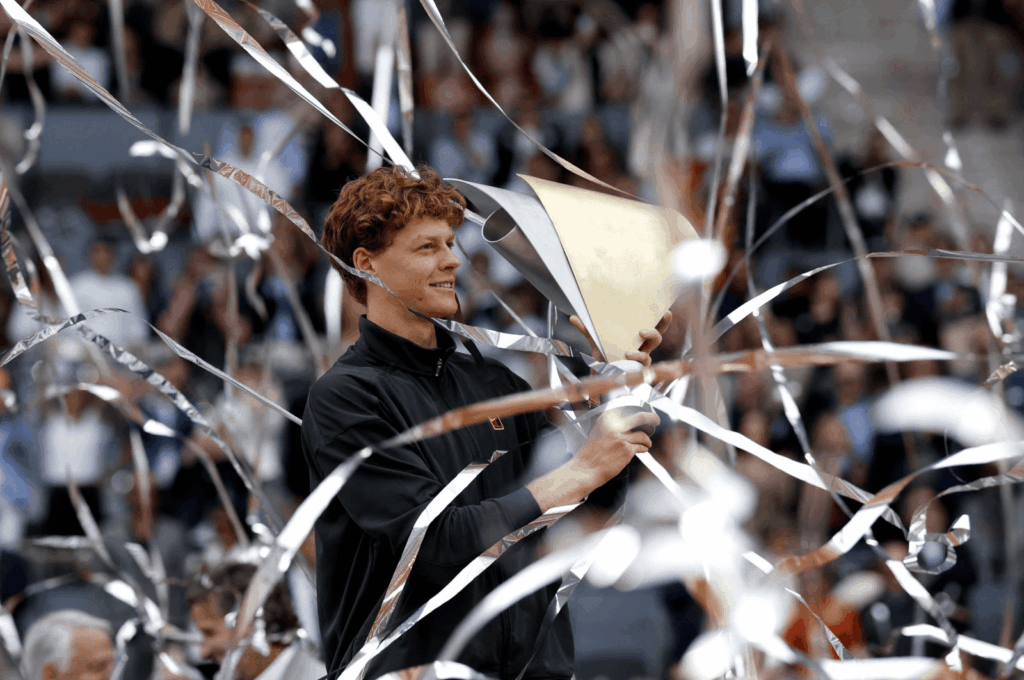
None of those wider questions appeared to concern Sinner as he lifted the trophy. His period without a Grand Slam title ended after only three tournaments, a drought that would represent an excellent career for many players.
The celebration was calmer than the emotional scenes that followed his first Wimbledon triumph 12 months earlier. Repeated success changes the experience of victory. The first title brings disbelief and release, while later trophies can produce a quieter form of satisfaction.
Sinner did not collapse to the court or cry uncontrollably. He held the trophy close and looked deeply content.
It was the expression of a player who had set himself a private target and completed it. Zverev had tested him, taken the opening set and briefly found a route into the match. Sinner responded by closing every important opening and returning to the level that has placed him above the rest of the tour.
For a few seconds, Zverev could see a path towards victory. Then Sinner found the line with a backhand, dropped the ball short and made that path disappear.