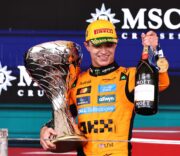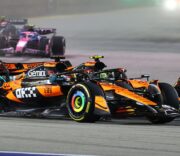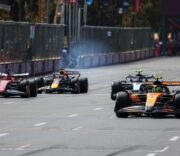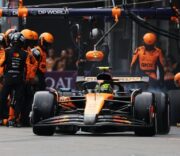

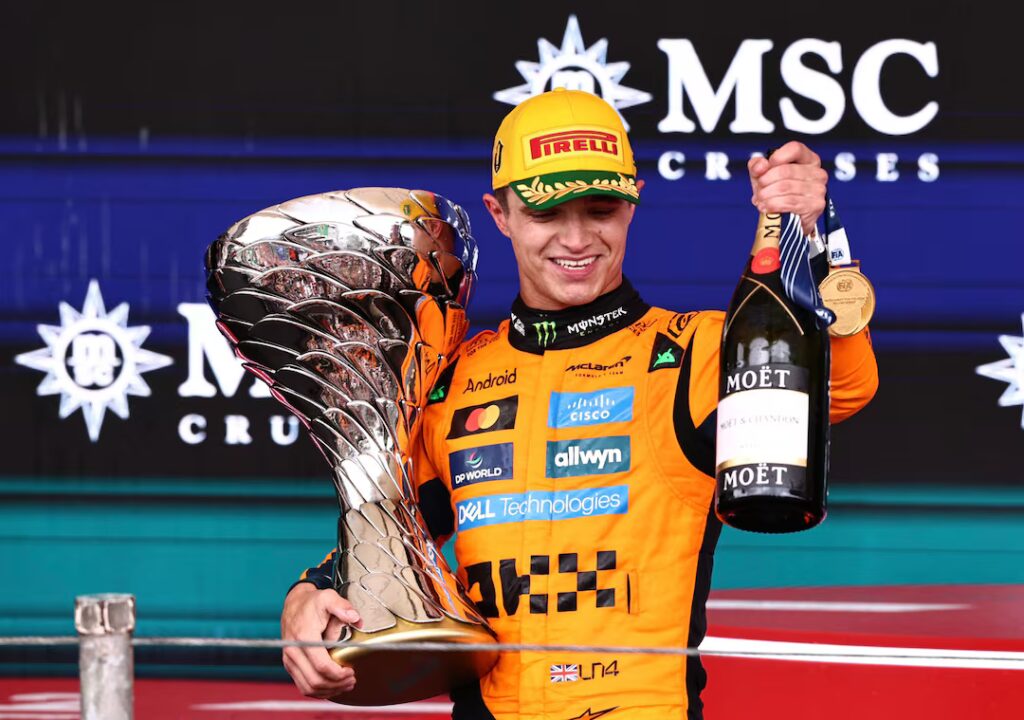
McLaren’s Lando Norris began the year tipped as the man to beat and ultimately lived up to that billing after a punishing season-long battle. His first world title did not come easily, with intense pressure from his teammate Oscar Piastri and Red Bull’s Max Verstappen. Closing the deal under that strain underlined how calmly Norris held his nerve even when the championship looked to be slipping away.
All three title contenders produced outstanding campaigns. Piastri, who stacked up a run of superb victories, faltered in the final third of the year. On low-grip tracks he struggled, making a string of costly errors that exposed a weakness just when the stakes were highest.
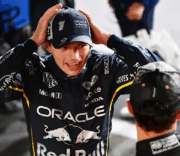
Verstappen, meanwhile, mounted a staggering late charge. From 104 points adrift after his home race at Zandvoort in August, he arrived at Abu Dhabi just 10 points behind. It was one of the most relentless comebacks of his career, another reminder that dismissing him is always dangerous, even if this time it fell just short of a fifth title.
Yet it was Norris who deservedly took the spotlight. He overturned a 34-point deficit to Piastri after Zandvoort, where he had sat desolate by the barriers when a mechanical failure ended his race. Rather than dwell on it, he doubled down on his self-belief and produced a run of brilliant drives to wrest back control of the standings. McLaren may have faltered in Las Vegas and Qatar, but in Abu Dhabi Norris was unshakeable. The first championship is always the most demanding; this one was earned the hard way.
Team of the year
McLaren were the obvious pick after delivering both the drivers’ crown and the constructors’ title – their first drivers’ championship since 2008 and their first double since 1998. Their season, though, was anything but straightforward. Determined to uphold the principle of letting their drivers race, they stuck to a complex system designed to treat Norris and Piastri as fairly as possible.
That approach created flashpoints, such as when Piastri had to hand a position back to Norris at Monza after the latter lost time with a slow pit stop. The call lit up the conspiracy theorists but was briskly dismissed as “nonsense” by chief executive Zak Brown, who insisted on the team’s neutrality.
Refusing to nominate a clear No 1 driver may have been admirable but it also kept the title battle wide open and helped Verstappen stay in contention far longer than necessary. Combined with the double disqualification in Las Vegas and a woeful strategy in Qatar, McLaren left themselves exposed in the final stretch. Even so, their car was the benchmark package for most of the campaign, with Red Bull only matching their pace after McLaren had already halted development. The constructors’ championship was effectively wrapped up by Singapore, with six races still remaining.
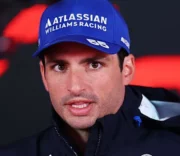
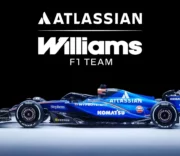
Red Bull also deserve recognition for continuing to upgrade their car with an eye on 2026, a bold call that allowed them to push McLaren to the very end. Meanwhile, Williams quietly outperformed expectations, regularly scoring points and punching above their weight against richer rivals.
Race of the year
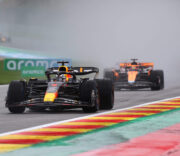
Once again, Brazil takes the honour thanks to a spellbinding performance from Verstappen. A year on from his charge from 17th to victory at São Paulo, he delivered another epic, storming from a pit-lane start in 19th to third at the flag.
He had labelled his car “completely broken” on Friday and then failed to hook up a lap in qualifying, suffering his first Q1 exit since the 2021 Russian Grand Prix. Red Bull rolled the dice after the sprint, revising the setup in search of grip over the Interlagos bumps but initially appeared to have gone the wrong way.
On Sunday, though, with a new engine and fresh setup, Verstappen and the team finally unlocked the pace that had been missing. His fightback through the pack was exhilarating: bold yet controlled, with every opening seized. Even three pit stops, including an early stop for a slow puncture, could not halt his progress.
By the finish he was up to third behind race winner Norris, a result that crucially kept his championship hopes alive. It was one of those drives that reminded everyone why Brazil so often provides the standout race of the year.
Best overtake
Verstappen again, this time at Imola, where the context made his move even more impressive. At that stage of the season Red Bull’s car was a handful, oscillating wildly in form – from sixth in Bahrain, to victory in Japan, then being blown away and finishing 40 seconds behind the McLarens in Miami. Imola marked another violent swing of the pendulum.
The race, despite two safety cars and strategic gambles, was effectively decided in a heartbeat at the start. Piastri just clung on to the lead from pole into the first corner, but Verstappen launched an audacious move around the outside through Tamburello. Braking as late as he dared, he swept past and was gone. With clean air and control of the pace, he had the race firmly in his grasp from that moment on. Afterwards he admitted he had simply decided to “send it” and the gamble paid off perfectly.
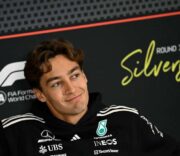
Charles Leclerc also deserves a nod for his pass on George Russell at Zandvoort. Russell grumbled over the radio at the time, only to change his tune after reviewing the replays. He later acknowledged it was a brilliantly executed move, one that carried a hint of the flair and aggression associated with Gilles Villeneuve.
Biggest disappointment
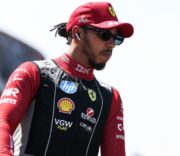
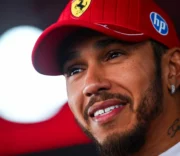
Nothing carried more expectation this year than Lewis Hamilton’s long-awaited first season in Ferrari red. It was the move he had dreamed of since childhood, and after so much success at Mercedes the prospect of restoring Ferrari to the summit gave the year an extra layer of intrigue.
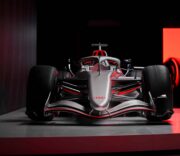
Switching teams was always going to be a huge challenge, but few foresaw just how difficult the transition would prove. Ferrari started on the back foot, lacking pace from the outset, and then effectively froze development of their car as early as April. That decision left Hamilton trying to adapt to a car that was not only tricky to drive but also falling further behind as rivals improved.
A sprint race win in China provided an early high point but proved a false dawn. The remainder of the season unravelled, with Hamilton and Ferrari unable to build momentum or threaten consistently at the front. For a partnership that had promised so much romance and renewed glory, it ended 2025 as the year’s most painful letdown.