
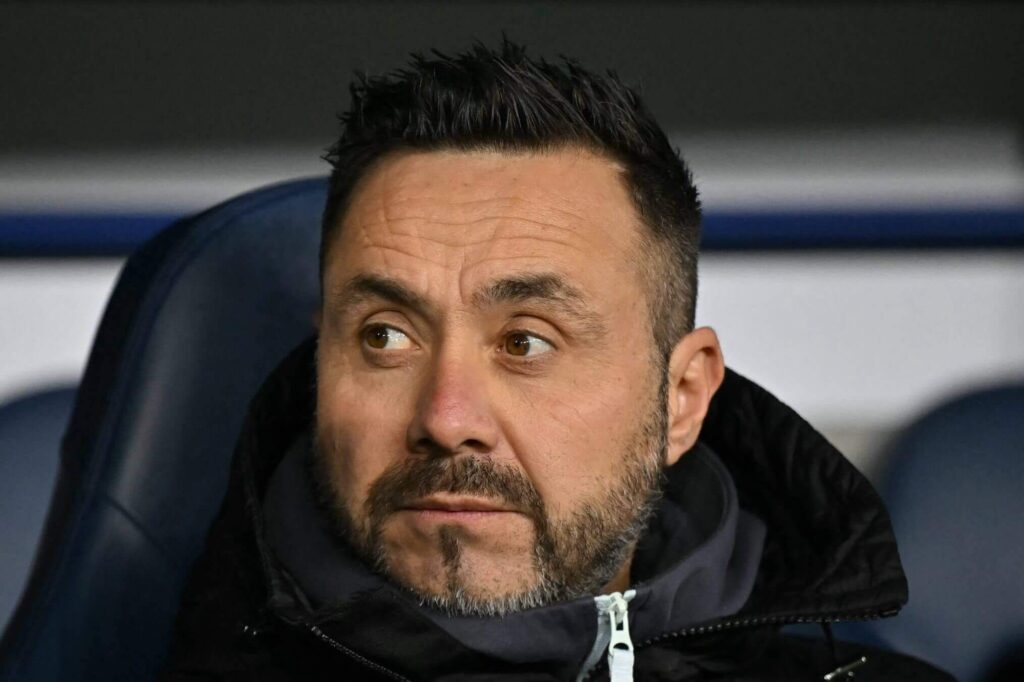
Tottenham have turned to Roberto De Zerbi in the middle of a season that has already gone badly off course. A club with modern facilities, major ambition and heavy spending has somehow drifted into a relegation fight and is now on its third manager of the campaign.
That alone says enough about how unstable things have become. For De Zerbi, the immediate assignment is obvious. He has to keep Spurs in the Premier League. But beyond that, the bigger question is how he helps restore a football identity at a club that has seemed disconnected from itself for too long.
The first priority is brutally simple
Whatever Tottenham want to become in the future, none of it matters if they do not stabilise now. De Zerbi has only a handful of matches left to drag the team clear of danger, and in this kind of situation style counts for less than resilience.
His footballing principles are well known. He wants brave possession, aggressive passing and control through structure. Those ideas fit Tottenham on paper and match what many supporters want to see. But elegant plans mean little if the players cannot handle pressure, win duels and survive ugly moments.
That is why the first requirement is not beauty, but fight. Spurs need players to show they can scrap, suffer and respond under stress. If they cannot do that, no tactical idea will save them.
De Zerbi will demand total commitment to his way
One thing that follows De Zerbi everywhere is clarity. He has strong ideas, and he expects players to follow them fully. He is not the kind of coach who happily compromises with half measures or tolerates a lack of conviction.
That could help Tottenham quickly, because the squad has often looked uncertain and emotionally fragile this season. A manager with firm demands can sometimes bring order where drift has set in. But that only works if the group accepts the message and commits to it.
If they do, Spurs may at least regain some shape and purpose. If not, the friction will show quickly.
The deeper problem goes beyond the coach
It would be too easy to pretend Tottenham’s troubles are only about the manager. The club has changed too much behind the scenes, and that kind of churn always reaches the pitch eventually.
When important roles above the coach keep shifting, it becomes harder to build a stable team model. Recruitment gets less coherent, identity becomes weaker and the squad starts to feel assembled rather than truly built. That has seemed to happen at Spurs.
The result is a team that too often looks like it has players with ability but not enough collective sense of what it is supposed to be.
Recruitment must now fit the coach, not just the market
Tottenham may still operate with financial caution compared to some rivals, especially on wages, so they cannot simply spend their way out of every mistake. That makes smart recruitment even more important.
But smart recruitment is not only about finding value. It has to be aligned with the manager’s football. There is little point bringing in talent if the pieces do not match the system or the personality needed for the dressing room.
De Zerbi is not likely to have taken this role without expecting some influence over that process. If Tottenham want this appointment to work beyond the short term, the club must now recruit with a clear football logic rather than in a scattered way.
Character has to return to the team
One of the clearest criticisms of Spurs this season is that they have lacked strong on pitch character. Not every player needs to be loud, but every good team needs enough leaders, enough resilience and enough conviction to survive difficult spells.
Too often Tottenham have looked short of that. And when a team lacks it, the gap becomes obvious, especially compared with clubs who may have smaller budgets but greater clarity and collective discipline.
That is one of the reasons sides like Brighton, Brentford and Bournemouth have often looked healthier, despite having fewer resources on paper. Their teams feel more aligned, more purposeful and more connected to a plan.
Tottenham need alignment as much as tactics
The biggest long term goal for De Zerbi may not be one shape or one formation. It may be getting the whole club moving in the same direction. Recruitment, coaching, development and first team football all need to feel part of one idea.
That alignment has looked missing at Spurs. And without it, even talented squads can slide into confusion.
So De Zerbi’s challenge is twofold. He must first deliver enough points to avoid disaster. Then he must help create a team identity that actually makes sense, one that fits the players, the supporters and the ambitions of the club.
Because whether Tottenham stay up or not, this cannot just be about changing another manager. It has to become about finally building something coherent.