
Chelsea manager Sonia Bompastor said the women’s game must be treated with greater respect after her side’s Champions League defeat to Arsenal, where two Chelsea goals were ruled out and the officiating became a major talking point.
The Blues lost 3 1 in the first leg of their quarter final, but Bompastor was left deeply unhappy with the decisions that went against her team, especially one first half incident that she felt should clearly have resulted in a goal.
Disallowed goal became the biggest source of anger
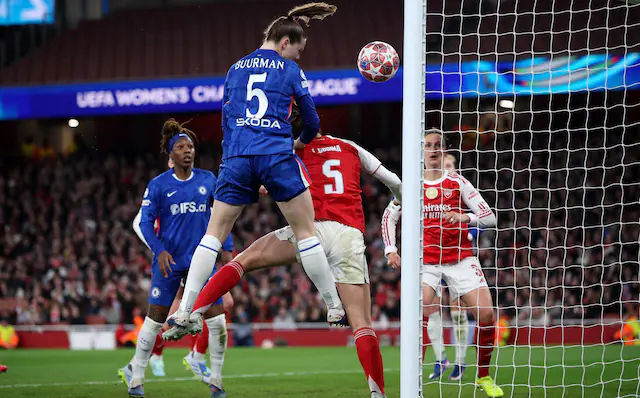
The most controversial moment came when Veerle Buurman headed the ball into the net, only for the effort to be ruled out because she was judged to have fouled Laia Codina in the build up.
The decision was checked by VAR, but the original call stayed in place. That left Chelsea frustrated, especially because the goal would have cut Arsenal’s lead to 2 1 just before the break and could have changed the tone of the match.
Bompastor made it clear afterward that she believed the goal should have stood and said she could not understand how VAR failed to correct what she saw as a wrong call.
Bompastor questions the level of officiating
Although she admitted it is always harder to speak about refereeing after a defeat, Bompastor said the standard in such a major match was not good enough. In her view, quarter finals of the Champions League demand the highest quality decisions and the players deserve that level of competence.
She also said this was not the first time Chelsea had suffered from questionable decisions in Europe this season, pointing to another moment against Barcelona when a goal from Catarina Macario was ruled out for offside.
For Bompastor, VAR itself is not the problem. She believes the system can help the women’s game, but only if the people using it are the right ones and make better judgments in key situations.
Calls grow for the best referees in the biggest matches
When asked how the women’s game could be shown more respect, Bompastor said the answer was simple. The biggest matches need the best officials, whether they come from the women’s game or the men’s game.
Her point was that quality and competence must come first. She stressed that football at this level cannot afford mistakes of this kind, particularly when technology is already there to help.
Former players also disagreed with the call
Bompastor was not alone in her criticism. Former England captain Steph Houghton described the disallowed goal as an outrageous decision and said it should have counted.
Others, including Nikita Parris and Ellen White, also questioned the officiating. White felt the referee acted too quickly and suggested that if the whistle had not gone immediately, VAR may well have allowed the goal to stand.
There was far less debate around Chelsea’s second disallowed effort late on, with replays showing that the foul on goalkeeper Anneke Borbe was correctly identified.
Chelsea still believe the tie can be turned around
Despite the frustration, Chelsea still have a second leg to play and will try to overturn the two goal deficit on 1 April. It is not an unfamiliar challenge for them, having already come back from a similar situation against Manchester City last season.
For now, though, the main reaction from Bompastor was not only about the scoreline. It was about what she sees as a bigger issue in the game and the need for women’s football to receive the standard of officiating it deserves.